Industrial real estate rarely gets the attention it deserves. It doesn’t have the glamour of residential launches or the buzz of office towers. And yet, almost everything we consume today—whether it’s a smartphone, a refrigerator, or a next-day online delivery—passes through this world at some point.
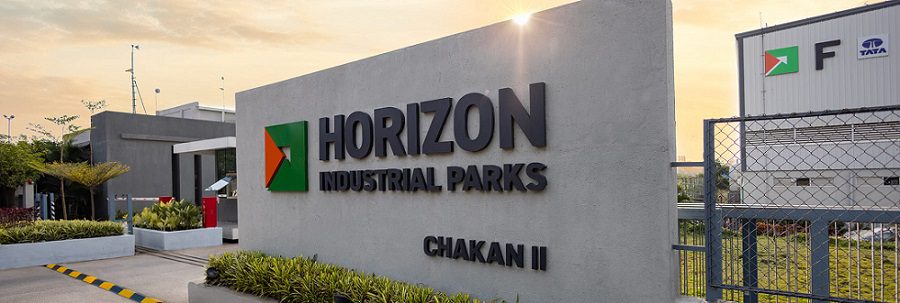
Horizon Industrial Parks operates squarely in this invisible but essential layer of the economy. To describe it simply as a “warehouse developer” would miss the point. Horizon is building integrated industrial ecosystems, designed around how modern businesses actually operate.
To understand the business model of Horizon Industrial Parks, it helps to first understand the problem it is trying to solve.
More than a Plain Vanilla Warehouse Play
A decade ago, companies looked for storage space. Today, they look for operational infrastructure.
E-commerce firms need fulfilment centres that can handle rapid sorting and dispatch. Manufacturers need facilities that meet strict compliance norms, power requirements, and layout specifications. Urban businesses need small, strategically located hubs close to customers, not on the outskirts of cities. And across all of this, reliability—of energy, manpower, security, and uptime—matters as much as square footage.
Horizon’s model is built around recognising that industrial real estate has fragmented into distinct use-cases, each requiring a different kind of solution.
Three Pillars of Horizon’s infrastructure offering
Instead of building one-size-fits-all assets, Horizon’s portfolio is structured around three broad infrastructure formats.
Fulfilment and logistics centres form the backbone of large-scale distribution. These are typically large-format facilities located along key freight corridors and consumption belts. Designed for high throughput, they cater to e-commerce companies, logistics providers, and large retailers. The emphasis here is on efficient movement—wide bays, high clear heights, robust flooring, and layouts that reduce turnaround time.
Industrial and manufacturing facilities serve a different need altogether. These are not just storage spaces but operating environments where production, assembly, and processing happen. Such facilities are customised around tenant requirements—whether that involves power-intensive operations, specialised layouts, or compliance with environmental and safety norms. The value here lies in enabling tenants to start operations quickly without sinking capital into building their own plants.
In-city industrial and logistics centres address a problem unique to dense urban markets. As cities expand, last-mile delivery becomes harder and more expensive. Horizon’s in-city assets are smaller, strategically located facilities within or near urban centres. These support faster delivery cycles, inventory buffering, and service operations where proximity matters more than scale.
Together, these three formats allow Horizon to serve businesses across the entire supply chain—from factory floor to customer doorstep.
Value-added services
The physical buildings are only one part of the story. Horizon’s deeper moat lies in the services layered on top of the infrastructure.
On-site and predictable energy availability safeguards operational continuity rather than merely improving cost efficiency. Horizon addresses this by integrating energy solutions directly within its parks, including access to renewable energy through rooftop solar installations. These systems reduce reliance on external grid supply, and help lower long-term energy costs. At the same time, they support tenants’ sustainability objectives.
Another often overlooked element is workforce accommodation and support infrastructure. Industrial parks located outside city limits struggle with labour availability. By facilitating organised accommodation and related amenities, Horizon reduces friction for tenants who would otherwise face high attrition or commuting challenges. What looks like a peripheral service actually improves tenant stickiness and operating efficiency.
Add to this shared utilities, waste-disposal, security, maintenance, and park-level management, and the offering starts to resemble an industrial operating platform, not just real estate.
The Ecosystem Effect
Individually, each of these services adds incremental value. Collectively, they create an ecosystem effect.
Tenants are not merely renting space; they are plugging into a ready-made operational environment. This reduces setup time, lowers capital expenditure, and allows businesses to scale faster.
For service providers operating within these parks—such as logistics, maintenance, and support services—the concentration of large, long-term tenants creates demand visibility and operational scale. The result is a more efficient operating environment where costs fall and utilisation improves.
Once embedded in such an ecosystem, the incentive to relocate drops sharply. That stickiness is central to Horizon’s long-term leasing model.
From Horizon’s perspective, this ecosystem approach improves occupancy stability and supports longer lease tenures with predictable escalation clauses. The result is a portfolio that behaves more like infrastructure than cyclical real estate.
Horizon Industrial Parks Revenue Model
The business model is straightforward in structure but nuanced in execution.
Horizon invests upfront in land acquisition, approvals, and development. Assets are then leased out on long-term contracts, generating steady rental income. Over time, rentals grow through contractual escalations while operating costs remain relatively stable, improving margins.
Because the company typically retains ownership of its assets, value compounds quietly. Well-located parks with stable tenants become increasingly valuable, both as cash-generating assets and as part of a larger institutional portfolio.
Promoters and Scale
Horizon is backed by entities affiliated with Blackstone, a global alternative asset manager with deep experience in real assets. In a capital-heavy business, this backing brings more than just funding—it brings discipline in asset selection, risk management, and portfolio construction.
Over the years, Horizon has assembled a large, geographically diversified portfolio spanning multiple industrial and consumption hubs across India. This diversification reduces dependence on any single market and aligns growth with broader economic and trade activity.
The IPO and what it represents
Horizon Industrial Parks has announced plans for an upcoming IPO, which marks an important milestone in its journey. From a strategic standpoint, public markets provide access to long-term capital that can be recycled into new developments, allowing the platform to scale without compromising balance sheet health.
For investors, the IPO opens a window into a business that sits at the intersection of manufacturing growth, logistics modernisation, and urban consumption—three structural themes shaping India’s economy.
The bigger takeaway
Horizon Industrial Parks is not betting on speculative land appreciation or short-term leasing cycles. It is building durable, solution-oriented infrastructure designed to stay relevant as supply chains evolve.
Its strength lies in understanding that modern industry doesn’t just need space—it needs systems. And the businesses that quietly build these systems often end up becoming the most enduring.
Disclaimer:
This analysis is based on publicly available information, including the Draft Red Herring Prospectus (DRHP) filed by Horizon Industrial Parks. It is intended solely for educational and explanatory purposes and does not constitute investment advice or a recommendation to buy, sell, or hold any securities. Readers are encouraged to conduct their own research and consult a qualified professional before making any investment decisions.